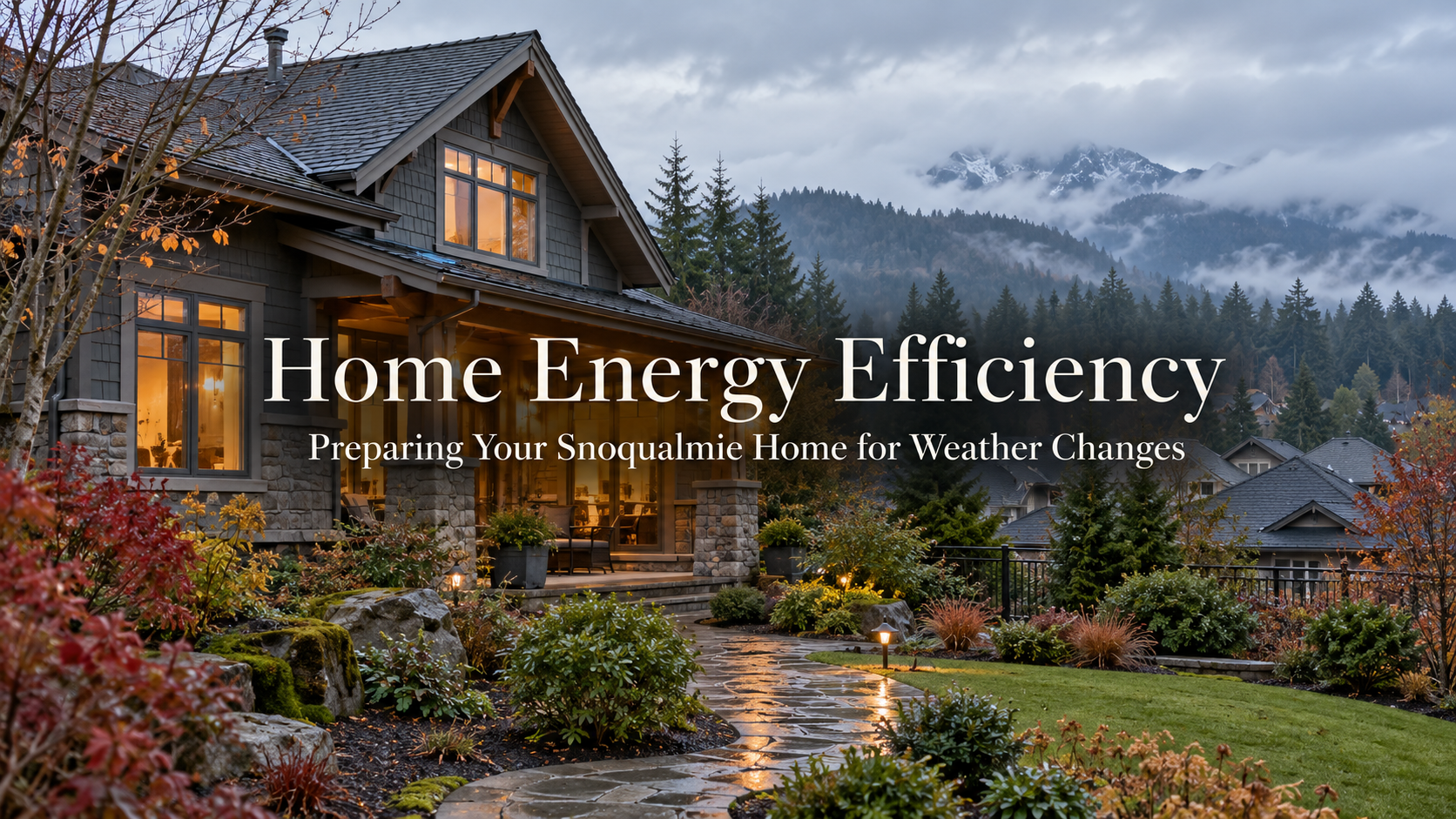
Home Energy Efficiency: Preparing Your House and Budget for Winter in Snoqualmie
The Snoqualmie Valley's higher elevation and exposure to Cascade Mountain weather systems means that winter cold snaps arrive earlier and run harder than at the closer-in Eastside...

Snoqualmie · Community Photo
The Snoqualmie Valley's higher elevation and exposure to Cascade Mountain weather systems means that winter cold snaps arrive earlier and run harder than at the closer-in Eastside communities. Valley homes that are not adequately sealed and insulated feel it first — and the energy cost difference between a well-prepared and a poorly prepared valley home through a five-month heating season is genuinely significant.
Where Homes Lose Energy in Snoqualmie
The Snoqualmie Valley's housing stock spans older North Bend and Fall City valley-floor homes from the 1960s through 1980s alongside the newer Snoqualmie Ridge master-planned construction from the 1990s through 2010s. The older valley homes have the most significant efficiency vulnerabilities — original windows, under-insulated attics and walls, and the kind of air infiltration through original construction gaps that blower door testing consistently reveals as the largest single source of energy loss in homes of this age.
Snoqualmie Ridge's newer homes were built to more modern standards but still reflect the energy code requirements of their construction date rather than today's Washington State code. Homes built in the Ridge's earlier phases — late 1990s and early 2000s — commonly have attic insulation at R-30 or below, which is meaningfully short of the R-49 to R-60 recommended for the valley's climate zone.
Low-Cost Fixes
Smart thermostat installation is particularly valuable in the Snoqualmie Valley's variable fall weather — the temperature difference between a warm October afternoon and a cold overnight can be 30-plus degrees in the valley, making automated setback more valuable here than in the more temperature-stable closer-in communities. Door weatherstripping, window rope caulk, and confirming that the home's fireplace damper closes fully are the standard pre-season low-cost priorities.
Bigger Investments
PSE's Energy Efficiency programs serve the valley and provide cash incentives for qualifying insulation, heat pump, and window upgrades. The federal 25C tax credit adds 30 percent of qualifying project costs. Valley homes with oil or propane heating systems — more common in the rural residential corridors outside Snoqualmie Ridge — should specifically evaluate heat pump conversion, which can reduce heating costs by 30 to 50 percent while providing the cooling benefit that the valley's warm summers increasingly require.
Why Buyers Care
Valley buyers who are specifically choosing the Snoqualmie lifestyle understand that the valley's climate is more demanding than the closer-in Eastside — and documented efficiency upgrades in a valley home speak directly to the long-term comfort and carrying cost story that motivates the purchase decision.
FAQ: Home Energy Efficiency in Snoqualmie
How do I winterize my home in Snoqualmie? Prioritize attic insulation on any pre-2005 home, confirm that the heating system has been serviced before October, install a smart thermostat, and replace weatherstripping on all exterior doors. Valley homes with propane or oil heat should specifically evaluate heat pump conversion.
Does energy efficiency increase home value in Snoqualmie? Yes — in a valley market where the monthly heating cost difference between an efficient and inefficient home is more pronounced than in milder Eastside communities, documented efficiency upgrades carry genuine buyer value.
Get more homeowner tips on Explore Snoqualmie. Curious how energy efficiency affects your home's value? Connect with Ed Laine.
Sources: pse.com — Energy Efficiency Programs, energy.gov — 25C Tax Credit, svsd410.org
Every Thursday — local news, events, deals, and new listings. Free forever.