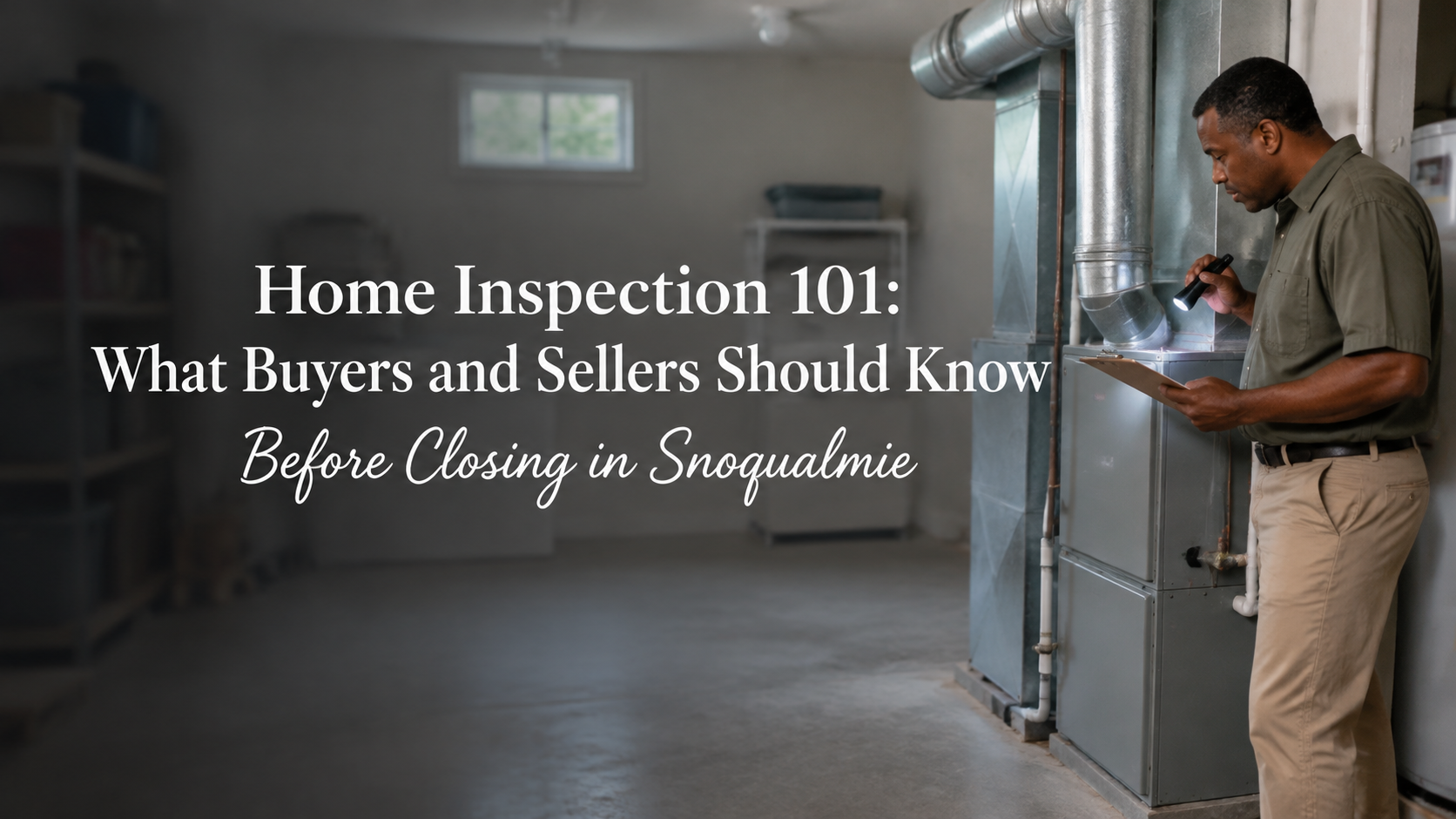
Home Inspection 101: What Buyers and Sellers Should Know Before Closing in Snoqualmie
The Snoqualmie Valley’s housing stock — spanning older valley-floor homes from the 1960s through 1980s alongside the newer Snoqualmie Ridge master-planned construction from the lat...

Snoqualmie · Community Photo
The Snoqualmie Valley’s housing stock — spanning older valley-floor homes from the 1960s through 1980s alongside the newer Snoqualmie Ridge master-planned construction from the late 1990s through 2010s — creates a split inspection profile that buyers and sellers in the valley need to understand specifically. What inspectors find in a 1972 North Bend rambler is meaningfully different from what they find in a 2005 Snoqualmie Ridge home — and both are different from what applies in most Eastside suburban markets.
What Inspectors Look For
Washington State licensed home inspectors examine all visible and accessible systems and components: roof, structure, foundation, exterior, insulation, ventilation, plumbing, electrical, HVAC, and interior elements. In the Snoqualmie Valley, the specific conditions that distinguish valley inspections from closer-in Eastside markets include: the valley’s higher precipitation than the Eastside average, which accelerates moisture-related findings; the older valley-floor homes’ construction era and the specific issues common to that period; and the rural-adjacent properties’ more frequent use of oil, propane, or wood heating systems that have their own inspection considerations.
Valley-floor homes from the 1960s through 1980s: original electrical panels, cast-iron drain lines, aging water heater and heating systems, and single-pane or early double-pane windows are consistent findings. The valley’s moisture levels mean that crawl space issues, roof condition, and exterior wood rot are found more frequently and more severely than in drier climates. Well and septic systems — more common in the valley’s rural residential corridors than in closer-in Eastside markets — require separate specialized inspections that fall outside the standard home inspection scope and should be specifically contracted.
Snoqualmie Ridge homes from the late 1990s through 2010s: the most consistent findings mirror what appears across the broader Eastside 1990s and 2000s construction — under-insulated attics, aging double-pane window seals, HVAC systems approaching replacement age, and deck condition.
Common Findings in Snoqualmie Valley Homes
Roof moss and condition, crawl space moisture and vapor barrier, HVAC age and condition, well and septic system condition (for properties on those systems), and deck and exterior wood condition are the most frequently noted findings in valley inspection reports.
Negotiating After an Inspection in Snoqualmie
The valley’s current market — 33 to 40-day average selling times and a relatively thin buyer pool — gives both buyers and sellers a specific negotiation context. A buyer who identifies material findings on a valley home has reasonable room to negotiate, but the valley’s thin comparable sales pool means that over-negotiating on an inspection can cause a transaction to collapse without readily available alternatives for either party. Working with an agent who understands the specific valley market is important for calibrating inspection negotiation to what is realistic rather than what a generic national guide would suggest.
Seller Prep Tips for Snoqualmie Valley Homes
For valley-floor older homes: the most impactful pre-listing steps are to have the crawl space vapor barrier inspected and remediated if needed, treat roof moss, document the age and condition of the heating system and water heater, and — for properties on well and septic — have those systems tested and documented before the listing goes active. For Snoqualmie Ridge homes, the steps mirror the broader Eastside pre-listing checklist: roof moss treatment, HVAC service and filter replacement, and deck inspection if the deck is more than 15 years old.
FAQ: Home Inspections in Snoqualmie
What do home inspectors look for in Snoqualmie? Roof moss and condition, crawl space moisture, HVAC age, and well and septic condition for applicable properties are the most material valley inspection findings.
What happens if the inspection finds problems in Snoqualmie? The valley’s thin market means inspection negotiations are more consequential for both parties than in higher-volume markets — calibrated, reasonable requests on material findings are the most effective approach.
Get more step-by-step buying and selling guides on Explore Snoqualmie. Have questions about what to expect at inspection? Connect with Ed Laine.
Sources: explore-snoqualmie.org, washi.org — Washington State Home Inspector Requirements, svsd410.org
Every Thursday — local news, events, deals, and new listings. Free forever.