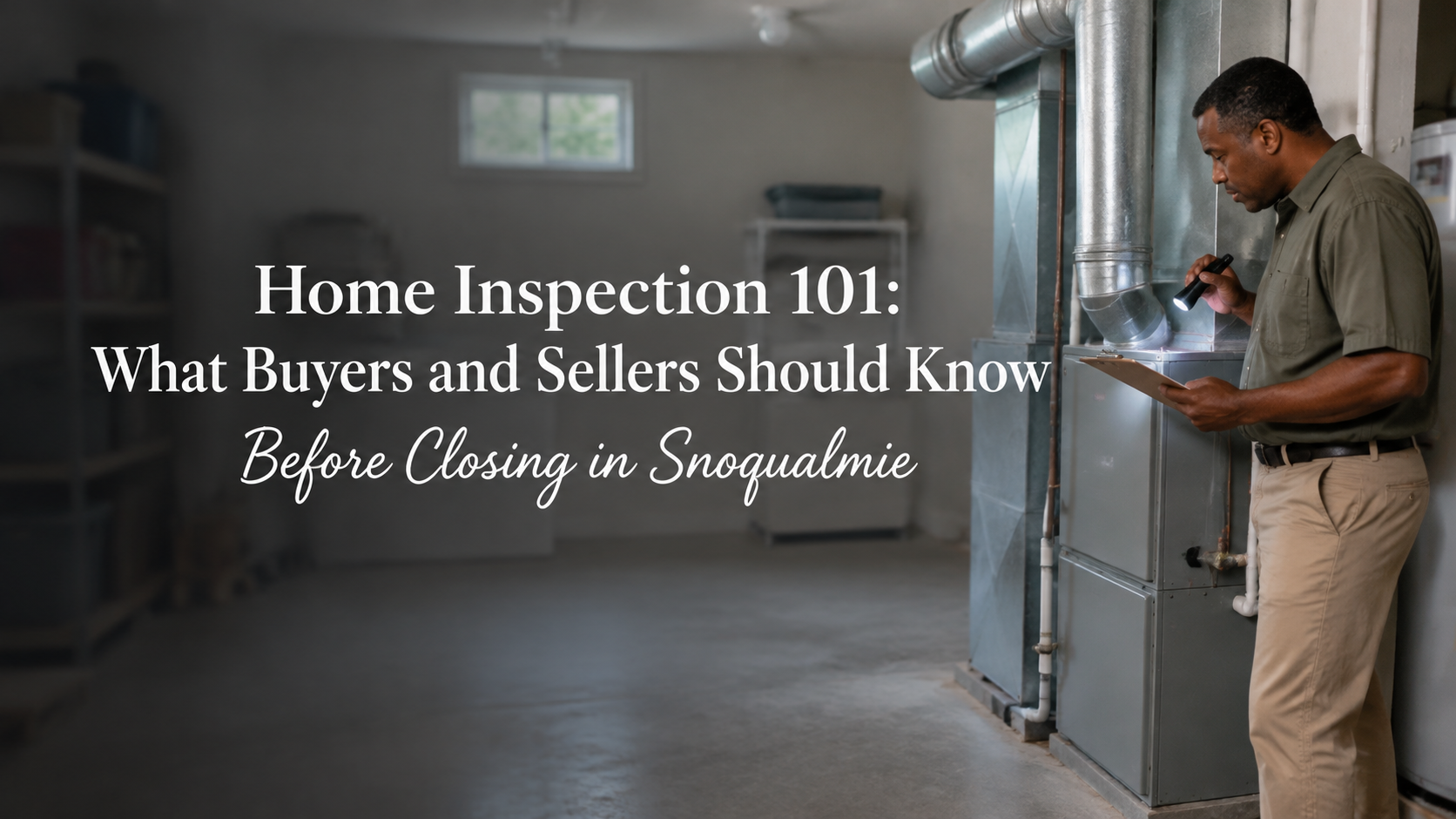
The Snoqualmie Valley’s housing stock — spanning older valley-floor homes from the 1960s through 1980s alongside the newer Snoqualmie Ridge master-planned construction from the late 1990s through 2010s — creates a split inspection profile that buyers and sellers in the valley need to understand specifically. What inspectors find in a 1972 North Bend rambler is meaningfully different from what they find in a 2005 Snoqualmie Ridge home — and both are different from what applies in most Eastside suburban markets.
What Inspectors Look For
Washington State licensed home inspectors examine all visible and accessible systems and components: roof, structure, foundation, exterior, insulation, ventilation, plumbing, electrical, HVAC, and interior elements. In the Snoqualmie Valley, the specific conditions that distinguish valley inspections from closer-in Eastside markets include: the valley’s higher precipitation than the Eastside average, which accelerates moisture-related findings; the older valley-floor homes’ construction era and the specific issues common to that period; and the rural-adjacent properties’ more frequent use of oil, propan...